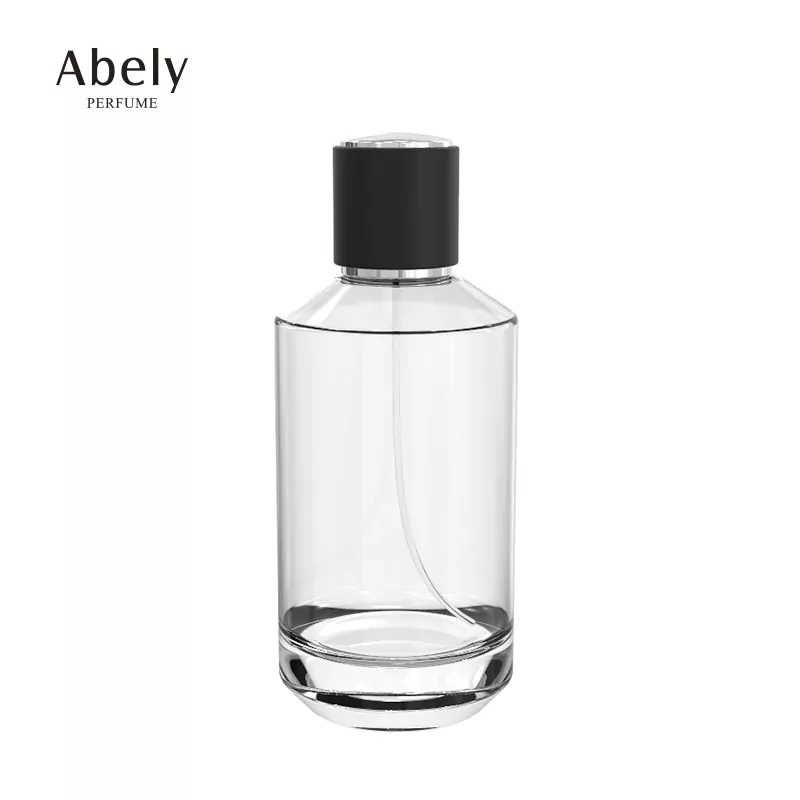
Packaging plays an important role in how a fragrance is presented to the market. For professional buyers, the choice of glass, bottle structure, and surface treatment needs to work together rather than being considered separately. A well-designed 100ml perfume bottle offers opportunities for distinctive shapes, refined surface treatments, and decorative details while maintaining a practical format for retail fragrance collections.
Glass Structure Sets the Foundation
Glass remains a central material for fragrance packaging, and the construction of the bottle influences both its appearance and handling. A perfume bottle 100ml provides more room for design development than smaller formats, allowing manufacturers to consider variations in shape, glass thickness, and base construction.
The base is particularly relevant when developing a distinctive perfume flacon. A thicker base can change the visual proportion of the bottle and contribute to the overall presentation. At the same time, glass thickness should be considered alongside the intended shape rather than treated as an isolated design feature.
Material evaluation should also consider glass clarity, color, surface quality, and compatibility with the intended finish. Clear glass may suit minimalist designs, while colored or coated glass can support more distinctive visual concepts. Buyers should also confirm whether the selected material and treatment can be applied consistently across the planned production volume.
Surface Finishes Expand Design Possibilities
Once the basic glass structure has been established, surface decoration provides another way to differentiate a perfume flacon. The referenced collection highlights refined finishes and surface decoration as part of its customization approach.
Depending on the desired appearance, brands can explore options such as frosting, color coating, gradient spraying, silk-screen printing, hot stamping, and metallic decoration. The appropriate combination depends on the bottle design, material, and desired visual effect. Before mass production, samples should be reviewed for color consistency, finish quality, and compatibility with the bottle structure.
For a perfume bottle 100ml, customization may involve not only external decoration but also the relationship between the bottle shape, base design, and finish. This gives professional buyers more flexibility when developing niche, luxury, or minimalist packaging concepts.
The choice of finish should remain consistent with the bottle’s structural design. A decorative treatment is more effective when it supports the intended visual direction instead of competing with the form of the glass itself.
Matching Customization With Commercial Requirements
A perfume flacon intended for professional fragrance packaging needs to balance appearance with production requirements. The referenced 100ml collection supports customization of shape, glass thickness, base design, and surface decoration, giving buyers several variables to evaluate during development.
For brands and distributors, the selected bottle should also align with the intended fragrance positioning, target price, and packaging configuration. Abely Perfume supports coordinated packaging development involving bottle design, cap and sprayer matching, and secondary packaging, allowing buyers to evaluate the complete presentation rather than the bottle alone.
A Practical Approach to Bottle Development
Material selection and finishing decisions are most effective when made as part of one packaging concept. Buyers can compare bottle proportions, structural details, and decorative possibilities before finalizing a perfume flacon for production.
Abely Perfume supports custom perfume packaging development, including bottle design, structural adjustments, surface decoration, and coordination with caps and secondary packaging. Before approving a design, buyers should review physical samples and assess finish consistency, component compatibility, and performance under expected handling and transport conditions.
