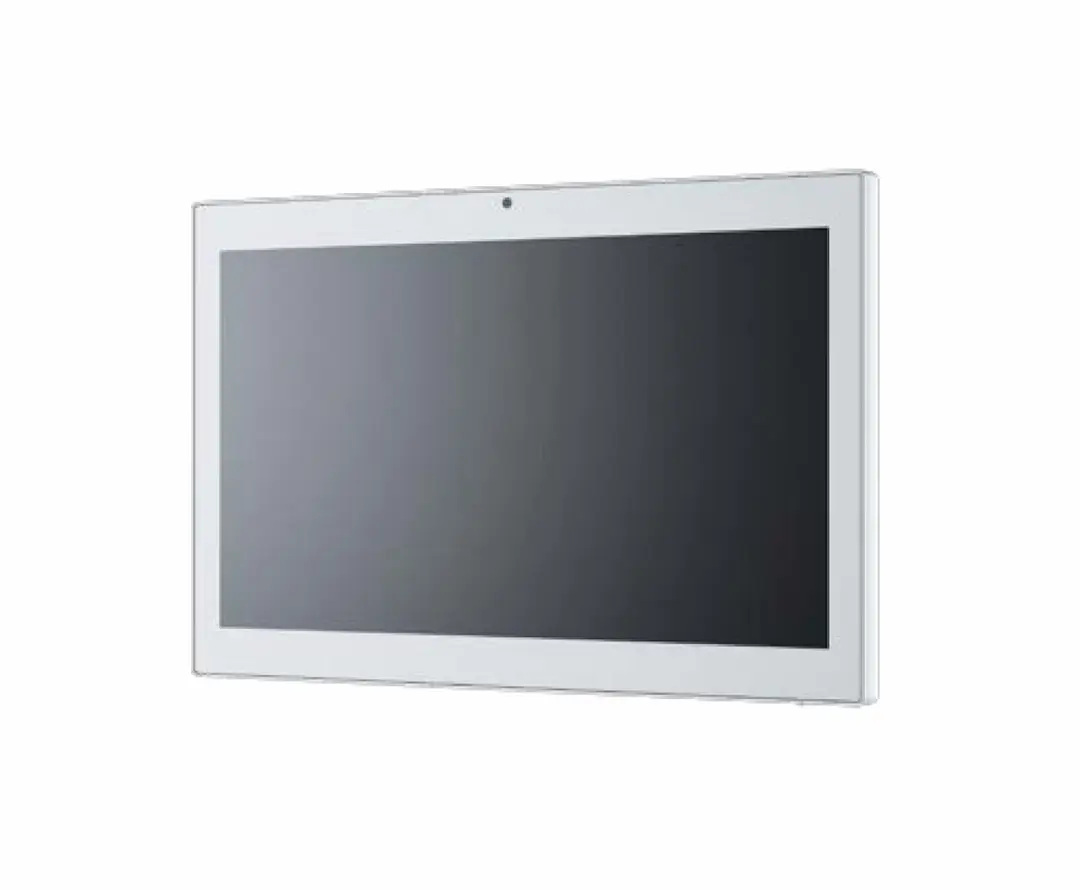
An industrial panel computer on a packaging line may run through dust, vibration, cleaning, and long production shifts. Vantron’s all-in-one panel PC category uses fanless cooling alongside touch input, front-panel protection, flexible I/O, and multiple mounting options. The design choice affects more than noise: it shapes contamination control, thermal behavior, service access, and operating life.
A fanless HMI removes one moving part from the enclosure, but it does not remove heat. You still need to match processor load, ambient conditions, mounting structure, and enclosure space. For continuous industrial operation, the useful question is whether passive cooling provides enough thermal margin for the actual workload.
Why Does Fanless Cooling Change Continuous Operation?
A fan-cooled panel PC moves air across internal components with a motor-driven fan. That airflow can carry heat away quickly, but it can also draw dust, oil mist, fibers, or moisture toward filters and internal surfaces. A fanless system transfers heat through a heat spreader, chassis, or other passive path instead.
The difference matters on a factory HMI beside a cutting machine, filling station, or conveyor. If airborne contamination reaches a fan intake, the filter may require regular cleaning, while restricted airflow can raise internal temperatures. Removing the intake can simplify contamination control in an enclosure that already has a sealed or protected front panel.
Fewer moving parts can also reduce one source of vibration and mechanical wear. That helps in an AGV service station or warehouse control terminal that experiences repeated movement and vibration. Fanless cooling is not automatically better for every workload, though. It only remains effective within its thermal envelope and with the intended mounting and heat-transfer conditions.
Contamination and Vibration Favor Fewer Moving Parts
Dust is not the only concern. A food-packaging line may produce powder, a machining cell may produce fine particles and oil mist, and a recycling station may expose electronics to mixed airborne debris. A fanless enclosure can reduce the number of openings required for forced airflow, although cable entries, connectors, and cabinet ventilation still need attention.
Vibration creates a separate design problem. A fan includes bearings and rotating blades that add a moving assembly to the system. Repeated vibration can affect any mechanical component, while a passive thermal design relies more on fixed surfaces and mounting pressure. The final result depends on enclosure construction, fastening, cable strain relief, and the vibration profile of the machine.
Fanless operation does not make a panel PC dustproof or waterproof by itself. Vantron’s category describes a waterproof and dustproof front panel and shock-resistant construction, but the complete installation still includes the rear housing, connectors, cable glands, mounting cutout, and cabinet. Treat those interfaces as part of the environmental design.
Thermal Design Decides Whether Fanless Stays Reliable
Passive cooling works by moving heat from the processor and other components into a chassis or heat-spreading structure, then into the surrounding air or mounting surface. A panel PC mounted against a metal machine door may reject heat differently from the same unit recessed into an insulated kiosk. Installation details can change the available thermal margin.
Your workload also matters. A screen displaying a simple machine dashboard may generate a different heat profile from an HMI handling multiple displays, local databases, video streams, or machine-vision data. Test the actual software image, graphics load, peripheral activity, and enclosure position rather than evaluating the panel PC only at idle.
A fan-cooled design can move more air when the thermal load rises, but it brings noise, airflow openings, filters, and maintenance into the system plan. A fanless design can simplify a quiet medical workstation or an enclosed factory console, yet it may require more careful processor selection and chassis design. The correct choice follows the sustained load, not a preference for silent operation.
The HMI Still Needs the Right Touch and Software Stack
Cooling is only one part of an operator station. The category supports multi-point PCAP touch intended for wet or gloved hands, along with Windows, Android, and Linux. Those options allow your team to align the operating system with existing control software, device drivers, update procedures, and remote-management requirements.
An industrial touch PC installed beside a press may need reliable input from gloved operators, clear alarm graphics, and serial or Ethernet communication with control equipment. A warehouse pick station may need USB scanners, a browser-based interface, and a simple recovery process. Confirm that the selected OS exposes each required interface through stable drivers and application access.
Mechanical selection belongs in the same review. Vantron’s panel PC range describes display sizes from 10.1 to 23.8 inches, flexible I/O configurations, and multiple mounting options. Choose the display and mounting method around viewing distance, control density, cleaning access, and cable routing. A larger screen does not compensate for an awkward installation or poorly sized touch controls.
Choose Fanless When the Environment Rewards Simplicity
Choose fanless cooling when the application has a sustained workload within the passive thermal design, the enclosure can transfer heat effectively, and dust, vibration, or acoustic limits make fewer moving parts useful. That can suit a factory HMI, AGV station, medical cart, or warehouse terminal that needs quiet operation and limited airflow maintenance.
Choose fan-cooled hardware when the sustained thermal load exceeds the passive design, the enclosure has controlled airflow, and regular filter or fan service fits the maintenance plan. A vision-heavy inspection station or high-load control console may favor active airflow if the complete system has suitable filtration and environmental protection.
Vantron has worked in embedded computing since 2002 and has over 200 research personnel from a variety of fields. For a long-running deployment, include product-lifecycle planning, replacement procedures, software images, documentation, and FAE support in the supplier review. Custom OS, I/O, enclosure, or logo requirements can be assessed with the thermal and mechanical design. Vantron is one supplier example to include in that comparison, while the final decision should follow measured workload and site conditions.
