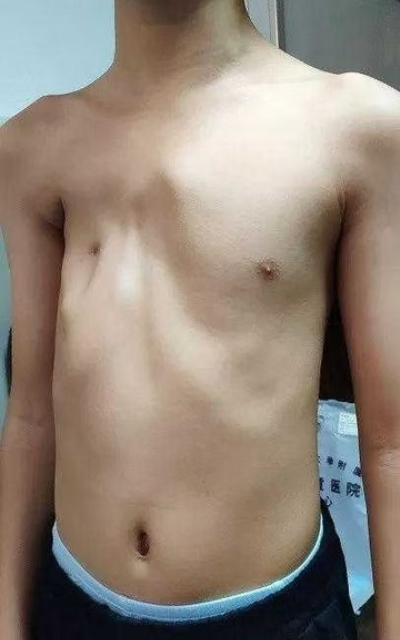
Poland syndrome is a rare congenital condition characterized by hypoplasia or absence of skeletal and soft tissue structures in the chest wall, such as underdevelopment or absence of the ribs, pectoralis major muscle, pectoralis minor muscle, or breast tissue. Additionally, patients may present with concurrent upper limb deformities on the affected side, including finger agenesis, syndactyly (fusion of fingers), brachydactyly (shortened fingers), and carpal bone hypoplasia, among other malformations.
Possible Reasons
The exact cause of Poland syndrome is not fully understood. Researchers believe this may be associated with abnormal embryonic development or a deficiency in blood supply to the chest wall and ipsilateral upper limb. Genetic factors may also play a role, along with other contributing elements, but a single definitive cause has not yet been identified.
Physical Signs and Symptoms
Common manifestations include asymmetric chest contour, hypoplasia or agenesis of the pectoralis major, pectoralis minor, and breast tissue. Significant chest wall depression may cause respiratory symptoms such as chest tightness, palpitations, and shortness of breath. Some patients may also present with scoliosis among other Poland syndrome symptoms.
Diagnosis and Age of Detection
Poland syndrome is typically diagnosed during childhood, often when visible chest wall asymmetry or upper limb abnormalities are first noticed by parents or caregivers. Physical examinations, coupled with imaging techniques like CT scans, MRI, and X-rays, help clarify the extent of chest wall and limb involvement. Early detection allows for more effective planning of surgical interventions, such as the Wang procedure, the Willine procedure, or soft tissue and chest wall reconstructions offered by The Institute of Chest Wall Surgery (ICWS).
Final Thoughts
While the origins of Poland syndrome are not fully known, knowing what might cause it and what its symptoms are can help doctors find it early and treat it well. Personalized surgical strategies can address both structural and cosmetic concerns, improving quality of life for affected individuals.
