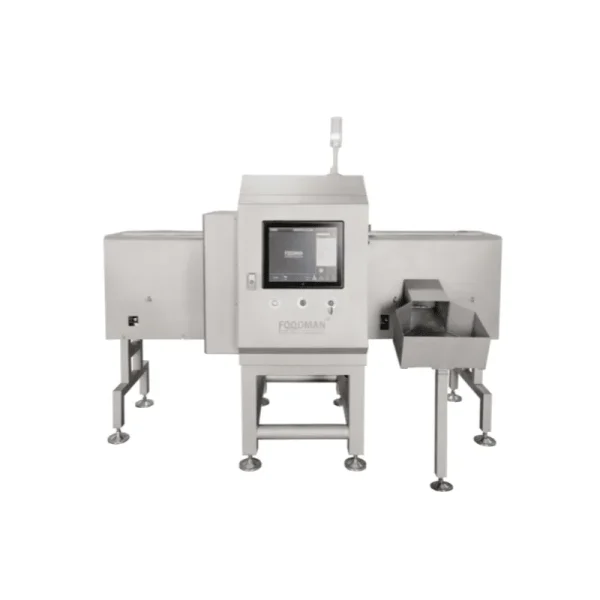
Food manufacturers face increasing pressure to maintain product safety while keeping production lines efficient. Foreign contaminants, packaging defects, and inconsistent quality can lead to recalls, waste, and customer complaints. Traditional inspection methods may not provide enough visibility for modern high-speed processing environments.
Industrial X-ray inspection equipment provides food processors with a non-destructive method to identify unwanted materials and product issues during manufacturing. By using image-based analysis and density differences, these systems help manufacturers detect contaminants that may be difficult to identify through visual inspection alone.
Why Food Processors Need More Than Traditional Contamination Checks
Food production environments involve complex materials, packaging formats, and operating conditions. A metal detector can identify many metallic contaminants, but some production risks involve materials such as glass, stone, ceramic, or dense plastic. These challenges require inspection technology that can analyze products beyond surface-level appearance.
The demand for food X-ray inspection equipment comes from the need to improve detection reliability across different food categories. Whether manufacturers process meat, seafood, snacks, bakery products, or prepared meals, inspection systems must adapt to product characteristics and production speed.
Packaged food creates additional challenges because contaminants may be hidden inside sealed containers. X-ray inspection allows manufacturers to inspect finished products without opening packaging, supporting both quality control and production efficiency.
Easyweigh develops inspection solutions designed for food processing environments where accuracy, stability, and integration with existing production lines are important factors. Its systems are used for detecting foreign objects and supporting consistent quality management across various industries.
How Industrial X-Ray Inspection Equipment Works Inside Food Production Lines
X-ray inspection systems operate by passing products through an inspection area where X-ray beams penetrate the product. The system captures image information based on density differences, allowing software to identify abnormal areas that may indicate contamination or product defects.
In a typical processing line, products move continuously through the inspection tunnel after filling, sealing, or packaging. If the system detects an abnormal image pattern, an automatic rejection mechanism can remove the affected product without interrupting the entire production process.
The position of inspection equipment within the workflow depends on the manufacturer’s quality strategy. Some companies inspect raw materials before processing, while others place inspection points after packaging to verify final product safety.
Different product forms require different inspection approaches. Bulk materials such as grains, nuts, and powders may need systems designed for loose product inspection, while packaged goods require equipment capable of analyzing sealed products at production speed.
Matching X-Ray Inspection Technology With Different Food Processing Scenarios
Food processors should select inspection solutions based on their specific production conditions rather than choosing equipment only by product category. Factors such as product density, packaging material, line speed, and contamination risks influence inspection requirements.
For packaged foods, systems need to analyze products inside bags, boxes, trays, or containers. Packaged product inspection solutions are commonly used for items such as snacks, dairy products, meat products, and ready-to-eat foods because they help verify product integrity after sealing.
Bulk food processing requires a different approach. Loose products moving through conveyors need inspection technology that can handle continuous flow while minimizing unnecessary product loss. Systems designed for unpackaged materials can support industries processing items such as coffee, grains, nuts, and agricultural products.
Certain products also create special inspection challenges. For example, meat and seafood processors may need to identify bones or dense foreign materials that are difficult to detect using standard methods. Advanced systems can support more detailed analysis for these applications.
Factors That Determine Reliable Inspection Results During Production
Installing an X-ray system does not automatically guarantee effective quality control. Manufacturers need to consider how equipment performance matches their actual production environment.
Product positioning is one important factor. Irregular shapes, overlapping products, or inconsistent spacing can influence image analysis. Proper conveyor design and production control help create more stable inspection conditions.
Environmental factors also affect long-term operation. Food processing facilities often involve moisture, temperature changes, and frequent cleaning procedures. Equipment designed for industrial environments should support hygiene requirements and reliable operation under demanding conditions.
Software capabilities are another consideration. Modern systems may include automatic learning functions and image processing technologies that help operators manage different products and reduce unnecessary production interruptions.
Maintenance planning is equally important. Regular cleaning, calibration checks, and operator training help ensure that inspection performance remains consistent throughout daily production.
Building a More Reliable Food Quality Control Process
Industrial X-ray inspection equipment is becoming an important part of modern food processing because manufacturers need stronger control over contamination risks and product quality. The technology provides a practical way to inspect products without damaging packaging or slowing production.
For companies evaluating inspection solutions, the right choice depends on production requirements, product characteristics, and workflow design. Equipment should support the manufacturer’s existing processes while providing reliable detection performance.
With experience in weighing, sorting, and inspection technologies, Easyweigh helps food processors improve quality control through integrated solutions designed for different production scenarios.
A well-planned inspection strategy allows manufacturers to protect consumers, reduce operational risks, and create more dependable food production systems. As food processing becomes increasingly automated, reliable inspection technology will continue to play a central role in maintaining product standards.
