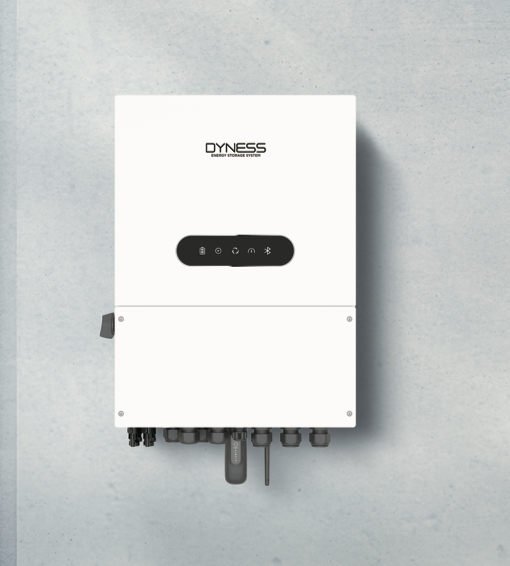
As commercial and industrial energy projects become more complex, system integration has become a major focus for EPCs, developers, and OEM partners. Instead of connecting multiple independent devices, many projects now prefer all-in-one energy storage systems that combine batteries, power conversion, and intelligent control into a single platform.
This approach simplifies deployment and improves system reliability. It also reduces installation time and operation costs. Understanding how these systems integrate battery, inverter, and energy management functions helps businesses choose a more efficient solution for commercial and industrial applications.
Why Integration Matters in Modern Energy Storage
Traditional energy storage architectures require separate battery cabinets, inverters, monitoring devices, and control systems. Although these components can work together, installation and commissioning often become more complicated.
An integrated system combines the core elements into one solution. This design minimizes wiring complexity and enables faster communication among components. It also makes maintenance easier and improves overall system efficiency.
For OEM and ODM customers, integrated platforms provide more flexibility when adapting products to different market requirements. They also help shorten project delivery cycles.
Battery Systems Form the Energy Foundation
The battery subsystem is responsible for storing and delivering electrical energy. In commercial and industrial applications, lithium iron phosphate (LFP) batteries are widely used because of their high safety and long cycle life.
Inside an all-in-one system, battery modules are managed by a Battery Management System (BMS). The BMS monitors cell voltage, temperature, current, and state of charge. It ensures balanced operation and protects the battery against overcharging, over-discharging, and abnormal conditions.
Because batteries are directly integrated into the cabinet, communication between the BMS and other subsystems becomes more efficient. This creates faster responses and improves overall safety.
How Inverters Convert and Manage Power
The inverter, or Power Conversion System (PCS), acts as the bridge between DC battery power and AC loads or the grid.
During charging, the inverter converts AC power into DC energy for storage. During discharge, it transforms stored DC electricity into usable AC power. The inverter also supports bidirectional energy flow, enabling applications such as peak shaving, load shifting, backup power, and renewable energy integration.
Integrated inverter architecture reduces connection losses and optimizes power conversion efficiency. It also allows the system to respond quickly to changing load conditions.
For commercial users, having batteries and PCS within one cabinet simplifies commissioning and reduces on-site engineering requirements.
How Energy Management Systems Coordinate Operations
The Energy Management System (EMS) serves as the brain of the energy storage system. It collects data from batteries, inverters, and external equipment to optimize energy flow.
Through intelligent algorithms, the EMS can schedule charging and discharging based on electricity prices, demand profiles, or photovoltaic generation. It also enables remote monitoring and operation.
Real-time data allows operators to identify abnormal conditions early and improve system availability. For industrial facilities and microgrids, EMS functions help maximize energy utilization while reducing operating costs.
Integrated communication among battery systems, PCS, and EMS creates a coordinated platform rather than isolated devices. This is one of the biggest advantages of modern energy storage architecture.
Benefits of an all in one liquid cooling system
An advanced all in one liquid cooling system provides more than structural integration. Thermal management is another critical factor affecting battery life and performance.
Liquid cooling technology offers better temperature uniformity compared with conventional air cooling. Stable temperatures help improve charging efficiency and reduce cell degradation.
The integrated liquid cooling design also enables higher energy density and supports large-scale applications. This makes the technology suitable for industrial parks, commercial buildings, photovoltaic storage projects, and microgrids.
In addition, precise thermal control contributes to improved safety and more consistent performance under varying environmental conditions.
A Practical Example from Dyness
Dyness focuses on intelligent energy storage solutions for commercial and industrial applications. Its product portfolio covers residential and C&I energy storage systems, integrated ESS platforms, and smart energy management solutions.
One example is the All-in-one Energy Storage System DH200Y. According to official specifications, the system adopts a DC1000V liquid-cooling architecture and provides 232 kWh capacity in a single cabinet. It supports AC parallel expansion up to ten units and can scale to 2.3 MWh. The compact design occupies approximately 1.58 m² while achieving high energy density.
The system integrates battery modules, PCS, and intelligent monitoring capabilities. It features smart liquid cooling with cluster-level temperature differences below 3°C. Modular construction also supports easier operation and maintenance, while online monitoring functions improve asset management. These characteristics make the platform suitable for photovoltaic storage and charging projects, commercial buildings, zero-carbon campuses, and industrial facilities.
Integration Is Driving the Future of Energy Storage
As energy storage projects demand greater efficiency and faster deployment, integrated solutions are becoming the preferred choice. Combining batteries, inverters, and energy management systems into a unified architecture simplifies engineering and enhances reliability.
With intelligent control and advanced thermal management, the latest all-in-one platforms provide a practical path toward higher performance and lower lifecycle costs. For OEM and ODM partners seeking scalable commercial energy storage solutions, integrated systems represent a more efficient and future-ready approach.
