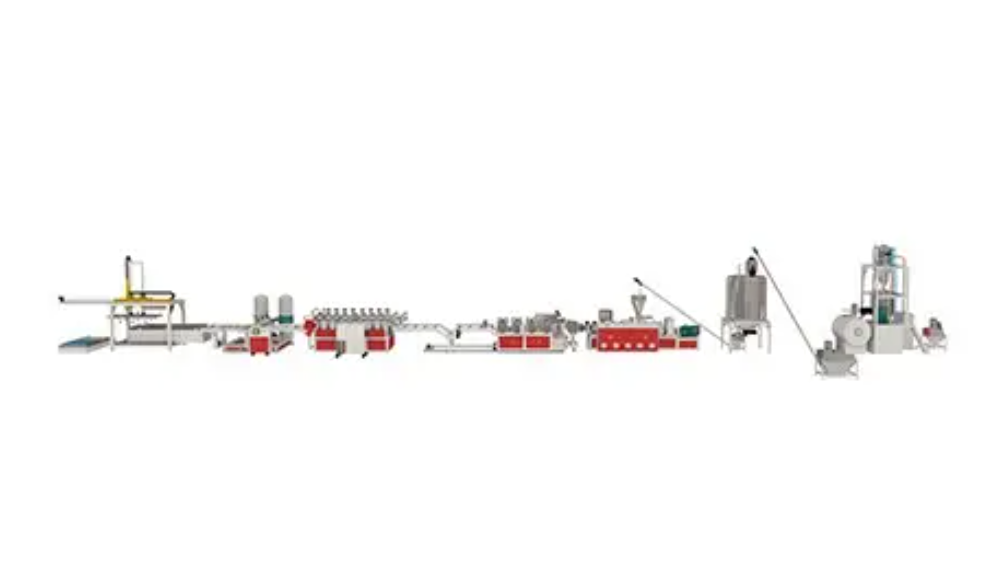
In a pvc foam board production line, cooling design is an important stage that influences dimensional stability after extrusion. Direct cooling usually refers to immediate surface cooling methods such as air blowing or roller contact, while indirect cooling uses secondary heat exchange systems like chilled water circulation to gradually reduce temperature. In projects related to Boyu, both methods are evaluated according to output stability and board thickness requirements. The pvc foam board extrusion line requires carefully controlled temperature management to support consistent board quality throughout production. The wpc flooring production line is often used as a reference in similar extrusion systems where temperature control affects forming quality, while the wpc flooring extruder machine highlights how stable melt extrusion supports consistent downstream cooling behavior.
Direct Cooling Characteristics and Industrial Application
Direct cooling is applied immediately after material exits the die head, allowing fast heat reduction on the surface layer. This method is widely used in the wpc flooring production line where stable line speed and surface uniformity are required. In Boyu’s equipment configurations, direct cooling is often combined with controlled airflow and calibrated roller contact to maintain shape accuracy during early forming stages. The wpc flooring extruder machine ensures stable melt temperature and pressure before cooling begins, which helps reduce deformation risk and supports continuous operation in medium to high-output production environments. In a pvc foam board extrusion line, direct cooling can contribute to faster surface stabilization while supporting efficient downstream processing.
Indirect Cooling and Internal Structure Stability
Indirect cooling systems focus on gradual temperature reduction through secondary media such as water-cooled plates or enclosed cooling chambers. In the wpc flooring extruder machine, this method helps reduce internal stress in thicker boards by controlling cooling speed more evenly. For the wpc flooring production line, indirect cooling is often selected when internal structure consistency is prioritized over rapid surface solidification. Based on Boyu’s engineering experience, this approach is usually combined with automated monitoring systems and controlled extrusion speed to maintain stable processing conditions during long production cycles. A pvc foam board production line may utilize indirect cooling when product specifications require improved dimensional stability and more uniform internal structure characteristics.
Conclusion: Selection of Cooling Methods in Production Systems
Both cooling methods play different roles in PVC foam board manufacturing. Direct cooling focuses on rapid surface stabilization, while indirect cooling emphasizes internal temperature balance and structural consistency. In Boyu’s equipment development and manufacturing experience, cooling configurations are adjusted according to production requirements and material specifications. The wpc flooring production line and wpc flooring extruder machine are often used as comparative references when analyzing extrusion process control strategies in industrial applications. Whether designing a pvc foam board extrusion line for higher throughput or optimizing a pvc foam board production line for specific product requirements, selecting an appropriate cooling method remains an important factor in maintaining stable production performance and product quality.
